Every business runs marketing campaigns with one goal in mind, growth. Whether it’s generating leads, increasing website traffic, or boosting sales, marketing is supposed to deliver measurable results.
But here’s the reality:
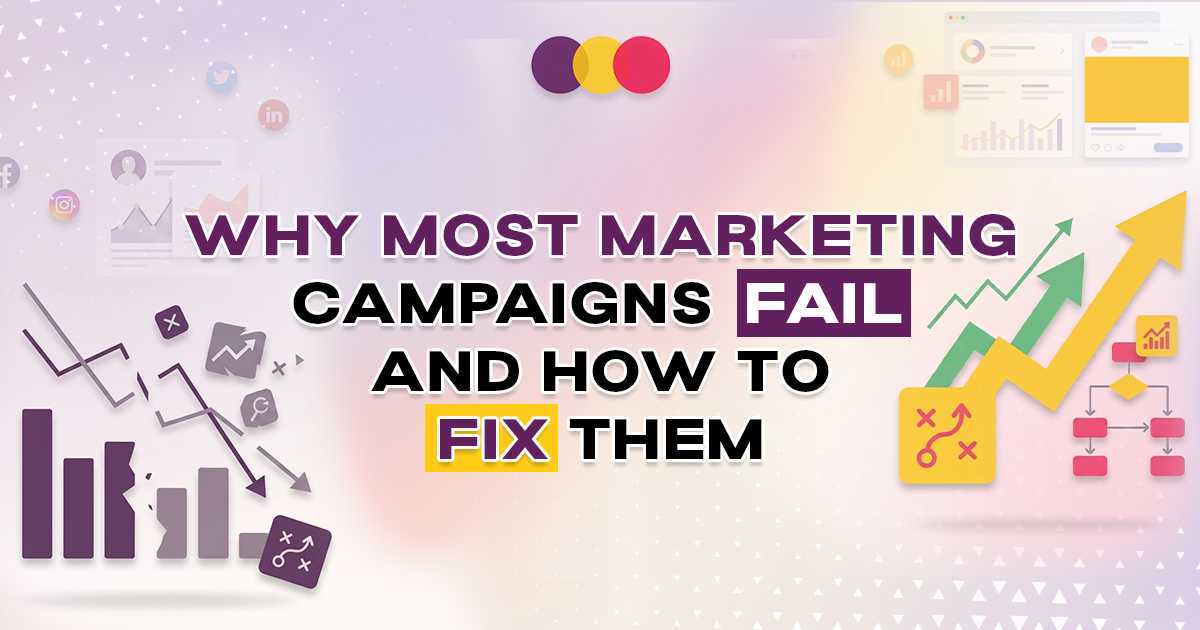
A large number of marketing campaigns fail to meet expectations. Budgets are spent, ads are launched, and content is created, yet the results are disappointing. Low engagement, poor conversions, and minimal return on investment leave businesses frustrated and confused.
So, what goes wrong?
The truth is, marketing campaigns don’t fail because marketing doesn’t work. They fail because of gaps in strategy, execution, and understanding of the audience.
Let’s explore the key reasons behind these failures, and more importantly, how you can fix them.
The Real Reasons Marketing Campaigns Fail
1. Starting Without a Clear Direction
Imagine starting a journey without knowing your destination. That’s exactly what happens when businesses launch campaigns without clear goals.
Many campaigns begin with vague intentions like “increase visibility” or “get more traffic.” While these sound good, they lack clarity and focus. Without a defined objective, it becomes impossible to measure success or optimize performance.
A campaign without a goal often leads to scattered efforts and wasted resources.
How to fix it:
Start with a specific outcome in mind. Define what success looks like. Is it more leads? Higher sales? Better engagement? Once your goal is clear, every decision from targeting to creatives becomes more aligned and effective.
2. Trying to Reach Everyone and Reaching No One
One of the most common mistakes in marketing is targeting too broad an audience. Businesses often believe that reaching more people will automatically lead to better results. In reality, the opposite happens.
When your message is too general, it fails to connect with anyone on a deeper level. People engage with content that feels relevant to their needs, problems, and desires.
If your campaign doesn’t speak directly to a specific audience, it simply gets ignored.
How to fix it:
Define your ideal customer clearly. Understand their behavior, challenges, preferences, and motivations. The more specific your targeting, the more effective your campaign will be.
Remember, it’s better to connect deeply with a smaller audience than to be ignored by a larger one.
3. Weak or Confusing Messaging
Even if you target the right audience, your campaign can still fail if your message isn’t compelling.
Your audience should instantly understand:
- What you offer
- Why it matters
- How it benefits them
If your messaging is vague, overly complex, or focused only on features, people lose interest quickly. Attention spans are short, and clarity is everything.
How to fix it:
Focus on benefits, not just features. Speak in simple, direct language. Highlight the problem you solve and the result you deliver.
A strong message doesn’t just inform, it persuades and motivates action.
4. Ignoring the Customer Journey
Many campaigns fail because they expect immediate results without considering how people actually make decisions.
Customers rarely buy on the first interaction. They go through stages awareness, consideration, and decision.
If your campaign only focuses on selling without building trust or providing value, it struggles to convert.
How to fix it:
Think of marketing as a journey, not a one-step process.
- At the beginning, focus on awareness and education
- Then build trust through engagement and value
- Finally, guide users toward conversion with strong offers
When your campaign aligns with this journey, results improve significantly.
5. Poor Creative Execution
In today’s fast-paced digital world, attention is the most valuable currency. If your creatives fail to capture attention, your campaign won’t even get a chance to perform.
Generic visuals, weak headlines, and a lack of emotional appeal are common reasons why campaigns underperform.
Your creative is the first impression, and first impressions matter.
How to fix it:
Invest time in creating high-quality, engaging content. Use strong hooks, compelling visuals, and clear calls-to-action.
Test different formats like videos, images, and carousel ads to see what resonates best with your audience.
6. Not Using Data Effectively
One of the biggest advantages of digital marketing is the ability to track everything. Yet many businesses fail to use this data properly.
They either don’t track key metrics or ignore the insights completely. As a result, they continue running underperforming campaigns without making improvements.
How to fix it:
Monitor performance regularly. Pay attention to metrics like click-through rate, conversion rate, and return on ad spend.
Data tells a story, listen to it. Use insights to refine your strategy, adjust targeting, and improve creatives.
7. Unrealistic Expectations
Many businesses expect instant success from their campaigns. When results don’t come quickly, they lose patience and stop too soon.
Marketing, however, is not an overnight process. It requires testing, learning, and continuous optimization.
How to fix it:
Adopt a long-term mindset. Give your campaigns enough time to gather data and deliver results.
Success in marketing comes from consistency and persistence, not quick wins.
8. Weak Landing Page Experience
Even the best campaigns can fail if the landing page doesn’t support them.
If users click on your ad but land on a slow, confusing, or poorly designed page, they leave immediately. This results in lost opportunities and wasted ad spend.
How to fix it:
Ensure your landing page is:
- Fast and mobile-friendly
- Easy to navigate
- Clear in its messaging
- Focused on a single goal
A smooth user experience increases trust and improves conversions.
9. No Testing or Optimization
Many marketers launch a campaign and let it run without making changes. This “set and forget” approach often leads to poor performance.
Every campaign has room for improvement, but without testing, you’ll never discover what works best.
How to fix it:
Continuously test different elements such as headlines, creatives, and targeting options. Even small changes can lead to significant improvements in performance.
Optimization is not optional, it’s essential.
Turning Failure into Success
The good news is that most campaign failures are fixable. With the right approach, you can transform underperforming campaigns into powerful growth drivers.
Start by building a strong foundation:
- Set clear goals
- Understand your audience
- Craft compelling messages
- Create engaging content
- Track and analyze performance
Then, focus on continuous improvement. Learn from your data, test new ideas, and refine your strategy over time.
Marketing success doesn’t come from a single perfect campaign; it comes from consistent effort and smart optimization.
Conclusions
Marketing campaigns fail not because of a lack of effort, but because of a lack of direction and strategy. When you understand the common pitfalls and take proactive steps to fix them, your chances of success increase dramatically.
In today’s competitive landscape, businesses that rely on guesswork struggle, while those that use data, strategy, and creativity thrive.
If you want your campaigns to succeed, focus on delivering value, understanding your audience, and continuously improving your approach.
Because in marketing, success is not about doing more, it’s about doing it right.